For Nail Picking, Skin Picking & Restless Hands

The Spinner Ring That Finally Replaces the Habit

Silent in meetings. Satisfying all day. Always on your finger — exactly where the habit happens. Built specifically for the hands that can't stop.

Shop All Rings →
★★★★★ Trusted by 5,200+ People 4.9 ★ rated
The Serene Ring
Free US Shipping $49+
30-Day Guarantee
Ships in 24 Hours
5,200+ Customers

How a Spinner Ring Breaks the Cycle

Grounded in the same habit-replacement principle therapists use for BFRBs. No apps. No sessions. Just a quiet tool that lives where the habit lives.

1

The Urge Arrives

Stress, boredom, or a hard moment triggers the tactile itch. Your fingers start hunting for their usual target.

2

The Ring Answers First

Before the habit takes over, you spin the outer band. Quiet. Satisfying. Your hands get the input they were chasing — without the damage.

3

The Pattern Breaks

Over weeks, the ring absorbs the craving. Your nails grow back. The loop quiets. The exception becomes the rule.

Real Stories, Real Relief

Here's what changed for real people who stopped picking.

Nail Picking
"I've been picking my nails for 15 years. Two weeks with this ring and my nails are actually growing back. I can't believe something so simple works."
Lauren M.
Austin, TX
Work Anxiety
"I spin it during meetings without anyone noticing. It's become my secret weapon for staying calm and focused at work."
Erica N.
Portland, OR
Fidgeting
"Bought this after my therapist suggested a fidget tool. It's subtle, beautiful, and actually helps redirect my nervous energy."
Olivia C.
Chicago, IL

Not Sure Which Ring Is Right for You?

Whether you pick constantly, fidget during meetings, or love the feel of tactile textures — there's a ring for your exact trigger. Start with our best sellers.

Shop Best Sellers →
$49+ Ships Free30-Day ReturnsHypoallergenic

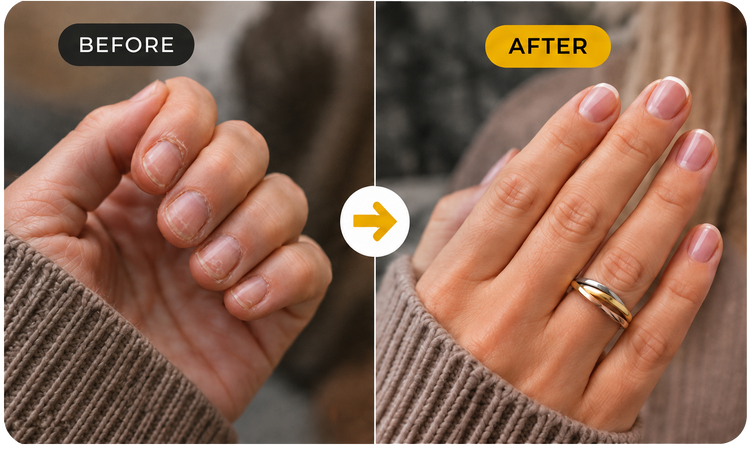
Before vs. After

What most people experience within the first 30 days of consistent wear.

Before
Cuticles that won't heal
Hiding your hands in photos
Pen clicking, knee bouncing, nothing satisfies
Stress with nowhere to go
The shame after, every time
After
Nails you're watching grow back
Hands in photos again, not behind you
Silent spin through your hardest meetings
A nervous system that finally has an outlet
The quiet confidence of a habit you actually replaced

Common Questions

Everything you need to know before making the decision

Most spinner rings are made for style. The Serene Ring is designed specifically for nail picking and anxiety — which means the spinning action is tuned for tactile feedback, the fit is optimized for all-day wear, and every detail is built around the moment the urge hits. It's not jewelry that happens to spin. It's a behavioral tool that happens to look like jewelry.
Yes — every Serene Ring is adjustable to fit US sizes 5–10, which covers about 95% of adults. Most of our customers wear size 6 or 7. If your ring arrives slightly loose or tight, gently squeeze or widen the open band with your fingers — it adjusts in seconds. And if it still doesn't feel right, we offer free size exchanges within 30 days.
Yes — it works by redirecting the habit, not fighting it. The smooth spinning motion gives your fingers something to do the moment the urge hits, replacing the picking before it starts. Most customers notice a real difference within 2 weeks of consistent wear. By week 4, the ring becomes automatic — your hand reaches for it before the urge fully forms. Visible nail and skin healing typically follows within 4–6 weeks.
You're fully covered. If you don't see a difference within 30 days, email us and we'll refund you completely — no forms, no hassle. We'd rather you walk away satisfied than keep a ring that isn't working for you. That said, most customers who use it consistently notice a change within 2 weeks. The key is wearing it on the hand you pick with most.
No. It looks like a regular minimalist ring. Even close friends often don't realize it spins until you show them. You can use it in meetings, on calls, at dinner — completely under the radar.
Yes. The Serene Ring is built on Habit Reversal Training (HRT) — a behavioral approach used by clinicians for decades to support people with Body-Focused Repetitive Behaviors. HRT is recognized by the TLC Foundation for BFRBs as a first-line behavioral approach.
Yes. The ring spins smoothly and quietly. You can use it in meetings, classrooms, or public spaces without anyone noticing.
Orders ship from Suwanee, Georgia within 24 hours of being placed (Mon–Fri). Most US customers receive their ring in 2–5 business days with tracking. Free shipping on orders $49+. If you're outside the US, contact us — international rates apply.
Yes. Every Serene Ring is made from hypoallergenic stainless steel base — safe for sensitive skin, nickel-free, and won't tarnish or turn green with daily wear. Plated finishes (gold, rose gold, silver) are tested for skin contact. If you have specific skin sensitivities, the Tactile Ring (uncoated stainless) is your safest choice.
Yes — daily contact with water (showering, washing hands) is fine. We recommend removing it for swimming pools (chlorine), saltwater (corrosion), and harsh chemicals (cleaning products) to keep the finish lasting longer. Sleeping with it is fine — many of our customers wear it 24/7.

Your Nails Can Start Growing Back

Join the people who stopped picking and started sleeping on their hands again.

Shop The Serene Ring →
Free Shipping $49+30-Day ReturnsShips from Georgia/USA in 24h
  • What Your Nail Picking Is Actually Trying to Tell You

    What Your Nail Picking Is Actually Trying to Tell You

    Most people treat nail picking as a problem to be eliminated. But what if it's not a flaw — what if it's information? Your Hands Are Communicating Nail picking doesn't happen randomly. It almost always spikes at the same moments: when a difficult conversation is coming, when you're trying to concentrate on something that won't cooperate, when you're in a situation that feels slightly out of your control. Your hands are trying to regulate what your mind is struggling to process. What the Picking Usually Signals Unprocessed stress: Stress that hasn't been acknowledged or discharged — meetings you're tense about before they start. Understimulation: Boredom, or situations that require your presence without engaging your mind. Emotional avoidance: Hands give the mind something immediate and physical to focus on, away from feelings that feel difficult. Perfectionism and control: The "fixing" pattern often signals a need for control in a situation where that control isn't available. How to Listen to the Signal Next time you notice you're picking, pause for just a moment before redirecting. Ask: what's happening right now? What was I thinking about just before my hands started? What am I feeling that I might not have consciously registered? You don't have to solve the underlying feeling to interrupt the behavior. But understanding it changes your relationship with the habit — from shame and self-criticism to curiosity and self-awareness. 📖 Related Reading The Nail Picking Shame Cycle — And How to Break It 7 Signs Your Anxiety Is Living in Your Hands → Redirect the signal with something that actually helps — The Serene Ring

    What Your Nail Picking Is Actually Trying to Tell You

    Most people treat nail picking as a problem to be eliminated. But what if it's not a flaw — what if it's information? Your Hands Are Communicating Nail picking doesn't happen randomly. It almost always spikes at the same moments: when a difficult conversation is coming, when you're trying to concentrate on something that won't cooperate, when you're in a situation that feels slightly out of your control. Your hands are trying to regulate what your mind is struggling to process. What the Picking Usually Signals Unprocessed stress: Stress that hasn't been acknowledged or discharged — meetings you're tense about before they start. Understimulation: Boredom, or situations that require your presence without engaging your mind. Emotional avoidance: Hands give the mind something immediate and physical to focus on, away from feelings that feel difficult. Perfectionism and control: The "fixing" pattern often signals a need for control in a situation where that control isn't available. How to Listen to the Signal Next time you notice you're picking, pause for just a moment before redirecting. Ask: what's happening right now? What was I thinking about just before my hands started? What am I feeling that I might not have consciously registered? You don't have to solve the underlying feeling to interrupt the behavior. But understanding it changes your relationship with the habit — from shame and self-criticism to curiosity and self-awareness. 📖 Related Reading The Nail Picking Shame Cycle — And How to Break It 7 Signs Your Anxiety Is Living in Your Hands → Redirect the signal with something that actually helps — The Serene Ring

    Read More
  • The Evil Eye: 3,000 Years of History and Why It Belongs on the Finger

    The Evil Eye: 3,000 Years of History and Why It Belongs on the Finger

    The evil eye is one of humanity's most enduring symbols — worn, drawn, and revered across cultures for more than 3,000 years. But what does it actually mean, and why does it appear on a ring designed for anxiety? What Is the Evil Eye? The evil eye (nazar in Turkish and Greek, ayin hara in Hebrew, mal de ojo in Spanish) refers to a curse or harm believed to be cast — often unintentionally — through a malevolent or envious gaze. The evil eye amulet — typically a blue-and-white eye symbol — is worn as protection, "watching back" and reflecting negative energy away from the wearer. Where It Appears Across Cultures Turkey and Greece: The nazar boncuğu (blue eye bead) is one of the most recognizable cultural symbols, worn by children and adults and hung in homes and businesses Middle East and North Africa: The hamsa hand with eye center appears across Islamic and Jewish traditions South Asia: Similar protective eye symbols in Hindu and Buddhist iconography Ancient Egypt: The Eye of Horus served a similar protective function dating back 5,000 years Why the Eye on the Finger? In many cultures, wearing the evil eye on the hand carries specific significance. The hand is both the instrument of action in the world and the most visible part of the body in social interactions. Placing protection on the hand shields both the wearer's actions and their most visible physical presence. For the Evil Eye Spinner Ring, this meaning runs deeper: the ring sits on the finger where anxiety most visibly expresses itself — where nail picking happens. The symbol isn't just decorative. It's protective in the most literal and personal sense. → See the Evil Eye Spinner Ring — centuries of protection on your finger

    The Evil Eye: 3,000 Years of History and Why It Belongs on the Finger

    The evil eye is one of humanity's most enduring symbols — worn, drawn, and revered across cultures for more than 3,000 years. But what does it actually mean, and why does it appear on a ring designed for anxiety? What Is the Evil Eye? The evil eye (nazar in Turkish and Greek, ayin hara in Hebrew, mal de ojo in Spanish) refers to a curse or harm believed to be cast — often unintentionally — through a malevolent or envious gaze. The evil eye amulet — typically a blue-and-white eye symbol — is worn as protection, "watching back" and reflecting negative energy away from the wearer. Where It Appears Across Cultures Turkey and Greece: The nazar boncuğu (blue eye bead) is one of the most recognizable cultural symbols, worn by children and adults and hung in homes and businesses Middle East and North Africa: The hamsa hand with eye center appears across Islamic and Jewish traditions South Asia: Similar protective eye symbols in Hindu and Buddhist iconography Ancient Egypt: The Eye of Horus served a similar protective function dating back 5,000 years Why the Eye on the Finger? In many cultures, wearing the evil eye on the hand carries specific significance. The hand is both the instrument of action in the world and the most visible part of the body in social interactions. Placing protection on the hand shields both the wearer's actions and their most visible physical presence. For the Evil Eye Spinner Ring, this meaning runs deeper: the ring sits on the finger where anxiety most visibly expresses itself — where nail picking happens. The symbol isn't just decorative. It's protective in the most literal and personal sense. → See the Evil Eye Spinner Ring — centuries of protection on your finger

    Read More
  • Nail Picking at Night: Why It Happens Before Sleep and How to Stop It

    Nail Picking at Night: Why It Happens Before Sleep and How to Stop It

    For many nail pickers, the period before sleep is the most vulnerable time. The day's defenses have dropped, screens occupy the mind but not the hands, and the transition to sleep can activate low-grade anxiety that finds its way to the fingers. Why Nighttime Is High-Risk Reduced inhibition — Social awareness (others might see) is completely off at night. Transition state anxiety — The shift from wakefulness to sleep is when residual daily stress gets processed — activating rather than calming for many anxious people. Screen time and passive stimulation — High visual stimulation, low physical engagement. Classic sensory gap. The "review the hands" behavior — Many pickers have a specific nighttime ritual of examining their hands, feeling for rough edges — which functions as its own trigger. What Helps Before Sleep Wear the ring to bed — The Serene Ring is designed for all-day, including sleep wear. Available at the exact moment of nighttime impulse, even half-asleep. Replace screen time with occupied activity — The 30–60 minutes before sleep is the highest-risk window. Swap passive consumption for light stretching, journaling, or reading a physical book. The "hands check" redirect — When hands move toward self-examination, touch the ring instead. Address baseline anxiety — Even 5 minutes of focused breathing before sleep has measurable effects on nervous system activation levels. If You Pick While Half-Asleep Many nighttime pickers wake having picked without memory of it. Wearing the ring on the most-used picking hand during sleep is often enough — the sensory signal of the ring under the fingers can redirect even semi-conscious picking behavior. → Designed for all-day and all-night wear — The Serene Ring

    Nail Picking at Night: Why It Happens Before Sleep and How to Stop It

    For many nail pickers, the period before sleep is the most vulnerable time. The day's defenses have dropped, screens occupy the mind but not the hands, and the transition to sleep can activate low-grade anxiety that finds its way to the fingers. Why Nighttime Is High-Risk Reduced inhibition — Social awareness (others might see) is completely off at night. Transition state anxiety — The shift from wakefulness to sleep is when residual daily stress gets processed — activating rather than calming for many anxious people. Screen time and passive stimulation — High visual stimulation, low physical engagement. Classic sensory gap. The "review the hands" behavior — Many pickers have a specific nighttime ritual of examining their hands, feeling for rough edges — which functions as its own trigger. What Helps Before Sleep Wear the ring to bed — The Serene Ring is designed for all-day, including sleep wear. Available at the exact moment of nighttime impulse, even half-asleep. Replace screen time with occupied activity — The 30–60 minutes before sleep is the highest-risk window. Swap passive consumption for light stretching, journaling, or reading a physical book. The "hands check" redirect — When hands move toward self-examination, touch the ring instead. Address baseline anxiety — Even 5 minutes of focused breathing before sleep has measurable effects on nervous system activation levels. If You Pick While Half-Asleep Many nighttime pickers wake having picked without memory of it. Wearing the ring on the most-used picking hand during sleep is often enough — the sensory signal of the ring under the fingers can redirect even semi-conscious picking behavior. → Designed for all-day and all-night wear — The Serene Ring

    Read More
  • How Spinner Rings Help With Anxiety: The Mechanism Behind the Calming Effect

    How Spinner Rings Help With Anxiety: The Mechanism Behind the Calming Effect

    Spinner rings have become widely recognized as anxiety management tools. But what's actually happening neurologically — and why does the spinning motion help? The Tactile Input Mechanism Anxiety often manifests as excess nervous energy with nowhere constructive to go. Repetitive, rhythmic physical movement is one of the most reliable ways to modulate this state — the same principle behind rocking (self-soothing in children), walking during difficult conversations, and foot tapping. All provide the nervous system with a rhythmic sensory outlet to gradually discharge excess activation. Why Spinning Specifically Works 1. Focused Tactile Sensation The sensation of smooth beads rotating under fingertips activates tactile receptors, providing grounding sensory input and interrupting the rumination loop that sustains anxiety. This is present-moment anchoring through the body. 2. Rhythmic Repetition Repetitive rhythmic action activates the parasympathetic nervous system — "rest and digest" counterpart to "fight or flight." This is why breathing exercises, rocking, and repetitive tactile stimulation consistently reduce physiological anxiety markers. 3. Displacement of Harmful Behaviors For people whose anxiety expresses through nail picking, the ring provides a competing response that displaces the harmful behavior while meeting the same underlying sensory need. The Conditioned Anchor Effect Long-term: the ring becomes a conditioned anchor — a stimulus the brain associates with a calm, regulated state. Many long-term users report that simply putting the ring on triggers a subtle calming response before any spinning occurs. → Find your ring — The Serene Ring

    How Spinner Rings Help With Anxiety: The Mechanism Behind the Calming Effect

    Spinner rings have become widely recognized as anxiety management tools. But what's actually happening neurologically — and why does the spinning motion help? The Tactile Input Mechanism Anxiety often manifests as excess nervous energy with nowhere constructive to go. Repetitive, rhythmic physical movement is one of the most reliable ways to modulate this state — the same principle behind rocking (self-soothing in children), walking during difficult conversations, and foot tapping. All provide the nervous system with a rhythmic sensory outlet to gradually discharge excess activation. Why Spinning Specifically Works 1. Focused Tactile Sensation The sensation of smooth beads rotating under fingertips activates tactile receptors, providing grounding sensory input and interrupting the rumination loop that sustains anxiety. This is present-moment anchoring through the body. 2. Rhythmic Repetition Repetitive rhythmic action activates the parasympathetic nervous system — "rest and digest" counterpart to "fight or flight." This is why breathing exercises, rocking, and repetitive tactile stimulation consistently reduce physiological anxiety markers. 3. Displacement of Harmful Behaviors For people whose anxiety expresses through nail picking, the ring provides a competing response that displaces the harmful behavior while meeting the same underlying sensory need. The Conditioned Anchor Effect Long-term: the ring becomes a conditioned anchor — a stimulus the brain associates with a calm, regulated state. Many long-term users report that simply putting the ring on triggers a subtle calming response before any spinning occurs. → Find your ring — The Serene Ring

    Read More
  • What to Expect When Trying to Stop Nail Picking: A Realistic Timeline

    What to Expect When Trying to Stop Nail Picking: A Realistic Timeline

    The honest answer to "how long will it take?" is more nuanced than most people want to hear — but also more hopeful than they expect. What "Recovery" Actually Means The goal isn't eliminating the urge — the urge is a signal about stress and sensory need that doesn't disappear. The goal is redirecting the response. Recovery means picking becomes less frequent, less automatic, and less dominant — the exception rather than the rule. Days 1–3: The Awareness Phase You still catch yourself picking many times per day. Normal. The key metric isn't how often you pick — it's how often you catch yourself and redirect. That catching is new. It's progress. Week 1: The First Shift The ring becomes a more frequent reach. Still picking, but moments exist where spinning satisfies the urge instead. These are significant — the first instances of the new neural pathway being used. Week 2: The Visible Change Most Serene Ring customers report the most notable change here. The ring is becoming automatic in some situations. Nails may begin to visibly improve. Weeks 3–4: The New Default Picking is still present but no longer automatic in most situations. Some describe the habit "loosening its grip" — this is the most accurate description of this phase. Month 2+: Consolidation The new behavior has become the trained response to many old triggers. Picking may resurface under unusually high stress but no longer dominates. Maintain the competing response during high-stress periods — the new pathway rebuilds each time you return to it. 📖 Related Reading Habit Reversal Training: The Gold-Standard Method → Start your timeline today — ships within 24 hours — The Serene Ring

    What to Expect When Trying to Stop Nail Picking: A Realistic Timeline

    The honest answer to "how long will it take?" is more nuanced than most people want to hear — but also more hopeful than they expect. What "Recovery" Actually Means The goal isn't eliminating the urge — the urge is a signal about stress and sensory need that doesn't disappear. The goal is redirecting the response. Recovery means picking becomes less frequent, less automatic, and less dominant — the exception rather than the rule. Days 1–3: The Awareness Phase You still catch yourself picking many times per day. Normal. The key metric isn't how often you pick — it's how often you catch yourself and redirect. That catching is new. It's progress. Week 1: The First Shift The ring becomes a more frequent reach. Still picking, but moments exist where spinning satisfies the urge instead. These are significant — the first instances of the new neural pathway being used. Week 2: The Visible Change Most Serene Ring customers report the most notable change here. The ring is becoming automatic in some situations. Nails may begin to visibly improve. Weeks 3–4: The New Default Picking is still present but no longer automatic in most situations. Some describe the habit "loosening its grip" — this is the most accurate description of this phase. Month 2+: Consolidation The new behavior has become the trained response to many old triggers. Picking may resurface under unusually high stress but no longer dominates. Maintain the competing response during high-stress periods — the new pathway rebuilds each time you return to it. 📖 Related Reading Habit Reversal Training: The Gold-Standard Method → Start your timeline today — ships within 24 hours — The Serene Ring

    Read More
  • Spinner Ring vs. Stress Ball: Which Works Better for Nail Picking?

    Spinner Ring vs. Stress Ball: Which Works Better for Nail Picking?

    Both are used for anxiety and nail picking. But for nail picking specifically, the real-world difference in effectiveness is significant. The Core Problem Both Are Solving Nail picking happens because hands need something to do — the nervous system is seeking tactile, repetitive sensory input. Both tools attempt to redirect that impulse. Which actually works in practice? Stress Ball: Pros and Cons Pros: Satisfying squeeze sensation, good for general stress, inexpensive. Cons: Not always with you — must be carried and remembered, absent at the exact moments you most need it. Socially obvious in professional settings. Grip pressure is a different sensory profile from the fingertip-focused input of nail picking. Spinner Ring: Pros and Cons Pros: Always present — on your finger, never forgotten. Fingertip-focused — same sensory zone as picking, more precise substitution. Silent and discreet — looks like jewelry anywhere. Physically incompatible — cannot spin and pick simultaneously (the core of HRT). Cons: Higher upfront cost. Brief adjustment period if you're not a regular ring wearer. The Verdict For desk-based general stress relief, a stress ball has its place. For nail picking — which happens anywhere, at any time, with no warning — a spinner ring is meaningfully more effective: always present, invisible in professional settings, targeting the same sensory zone as picking itself. 📖 Related Reading Do Anxiety Rings Actually Work for Nail Picking? → Find the tool that's always there when you need it — The Serene Ring

    Spinner Ring vs. Stress Ball: Which Works Better for Nail Picking?

    Both are used for anxiety and nail picking. But for nail picking specifically, the real-world difference in effectiveness is significant. The Core Problem Both Are Solving Nail picking happens because hands need something to do — the nervous system is seeking tactile, repetitive sensory input. Both tools attempt to redirect that impulse. Which actually works in practice? Stress Ball: Pros and Cons Pros: Satisfying squeeze sensation, good for general stress, inexpensive. Cons: Not always with you — must be carried and remembered, absent at the exact moments you most need it. Socially obvious in professional settings. Grip pressure is a different sensory profile from the fingertip-focused input of nail picking. Spinner Ring: Pros and Cons Pros: Always present — on your finger, never forgotten. Fingertip-focused — same sensory zone as picking, more precise substitution. Silent and discreet — looks like jewelry anywhere. Physically incompatible — cannot spin and pick simultaneously (the core of HRT). Cons: Higher upfront cost. Brief adjustment period if you're not a regular ring wearer. The Verdict For desk-based general stress relief, a stress ball has its place. For nail picking — which happens anywhere, at any time, with no warning — a spinner ring is meaningfully more effective: always present, invisible in professional settings, targeting the same sensory zone as picking itself. 📖 Related Reading Do Anxiety Rings Actually Work for Nail Picking? → Find the tool that's always there when you need it — The Serene Ring

    Read More